
Self checkout meets RFID.
Self checkout hands the scanning to the customer, and a meaningful share of its losses happen at exactly that step: items that never cross the scanner, barcodes that ring up as something cheaper. RFID removes the step itself. When the kiosk reads every tag in the basket at once, there is nothing to skip and no code to swap. What remains is everything RFID cannot see.
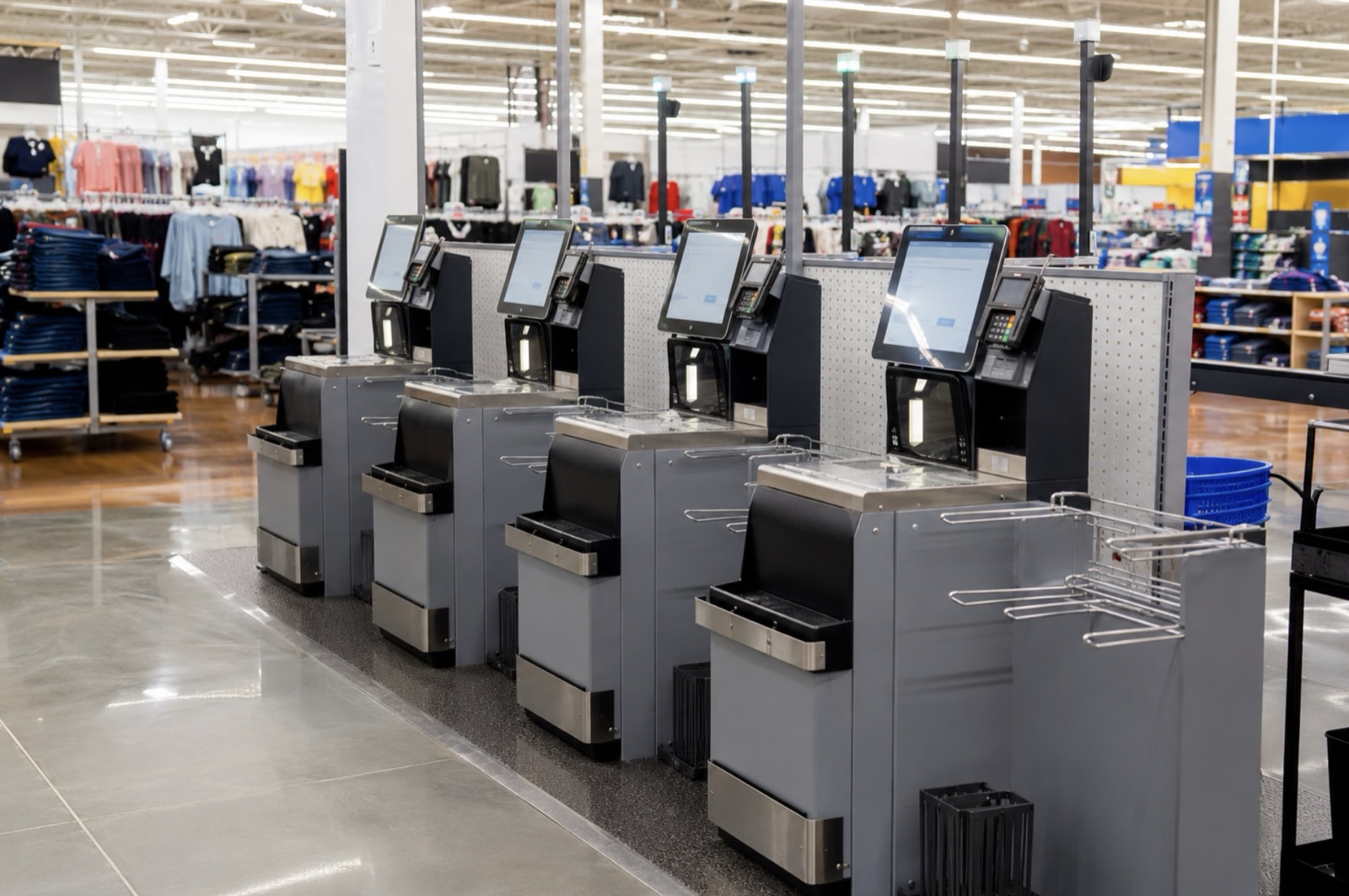
The Problem, Briefly
We covered the shrink side of unattended lanes in an earlier dispatch, Self Checkout and Retail Theft: when the customer runs the transaction, the store inherits every scan they skip, fumble, or fake. The failure modes concentrate at one point, the moment an item is supposed to be identified. A missed scan, deliberate or not, and the item leaves unpaid. A swapped barcode, and a premium item rings up as a budget one.
Every one of those failure modes exists because the checkout depends on a human aiming a printed code at a scanner, one item at a time. That is the dependency RFID removes.
How an RFID Checkout Works
In an RFID checkout, the customer places items, bag and all, into a reader zone at the kiosk. The reader wakes every inlay in the basket and collects their serial numbers in one sweep, no aiming, no line of sight, no per item handling. The register totals what the tags report. The widely cited example is Uniqlo's drop and total checkout, where a bin full of folded apparel rings itself up in seconds, but the approach is general: full item level tagging in, bulk reading out.
Two properties of the technology do the antitheft work here:
- Nothing is skippable. The read is involuntary. An item in the basket is an item on the total, whether or not the customer presented it. The accidental missed scan disappears along with the deliberate one.
- Identity is not printed, it is embedded. A barcode says whatever label is stuck to the item. An RFID serial number was associated with the item when it was tagged, typically at the factory through source tagging. Covering a premium item's code with a cheaper one changes nothing, because the inlay under the fabric is still telling the truth.
What It Does Not Fix
RFID moves the fraud boundary; it does not abolish it. The checkout can only total what enters the reader zone. Items concealed before the kiosk, worn out the door, or never brought to the checkout at all are outside its reach, exactly as they are outside a barcode scanner's. Concealment, the oldest move in shoplifting, is untouched.
The demands are also familiar from our analysis of RFID at the exit: the model requires every sellable item to carry an inlay, which is why the working examples cluster in vertically integrated apparel, where one company controls the product, the tagging, and the store. A general merchandise floor with thousands of vendors is a different tagging problem, and until coverage is total, the kiosk still needs a barcode path for the gaps.
The Door Still Matters
Because concealment survives, the exit layer does not retire when the checkout gets smarter. The pairing actually gets stronger: a store with RFID at the kiosk can also check serial numbers at the door, and the difference between the two reads is precisely the unpaid merchandise. Whether that door check is an RFID exit system or classic EAS pedestals is the trade we examined in Can RFID Replace Your EAS Pedestals?, and dual technology tags let one tag serve the kiosk and the pedestal at once.
There is one quiet operational win worth naming. At a staffed EAS checkout, deactivating labels is a physical step, a pad the cashier sweeps items across, and unattended lanes have always made that step awkward: a customer who misses the pad alarms at the door holding a paid receipt. RFID has no deactivation step. The sale flips the item's status in software, silently, no matter who ran the transaction. For unattended checkout specifically, that is a real friction removed.
A Sober Outlook
RFID checkout is not a general answer to self checkout shrink today; it is a category answer. Where item level tagging is already total, mostly apparel, it removes the scan as a failure point and takes barcode fraud off the table with it. Where tagging is partial, the barcode path remains, and with it the old exposures. Stores in the second group still lean on the familiar toolkit, attended lanes for risk categories, camera analytics, receipt checks, and a working door layer, while the tagging coverage that would change the math builds up through source tagging programs.
The equipment split runs the way it always does in this journal: the counting and checkout side of RFID, readers, labels, and software, is covered at rfidinventorytags.com, and the door side, pedestals, deactivators, and tags, is at securitytagstore.com, both Retail Security Group properties.